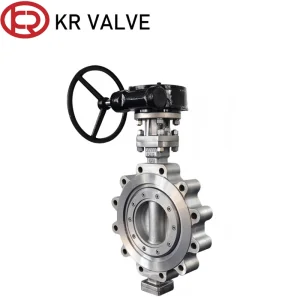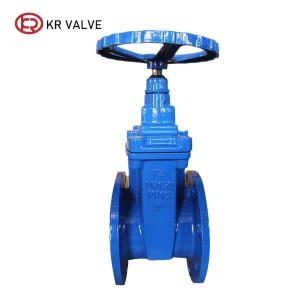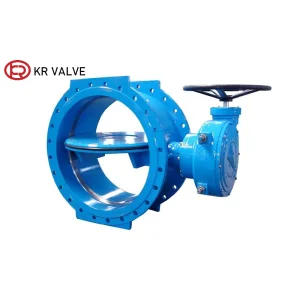
Industrial Valves & Pump Protection Systems
Precision-engineered non return valves, gate valves, and triple-eccentric butterfly systems manufactured to DIN, BS, ANSI, and API standards.
Technical Fundamentals of Non Return Valves for Water Pumps
Understanding fluid dynamics, pressure transients, backflow mechanisms, and hydraulic surge protection in high-performance water pump installations.
Hydrodynamic Backflow Prevention
In high-capacity water pumping systems, a non return valve (check valve) acts as an automated directional flow control safeguard. When the pump unit shuts down or experiences an unexpected power outage, fluid velocity rapidly drops to zero, followed by a pressure surge driving the column backward. The non return valve automatically seals against reverse pressure differentials, preventing back-spinning of pump impellers and protecting driver motors from severe torsional damage.
Water Hammer & Surge Attenuation
Transient pressure waves generated during sudden valve closure—commonly referred to as water hammer (hydraulic shock)—can exceed design pressures by 300% to 500%. Advanced OEM non return valves utilize spring-assisted dynamic closing or dual-plate disk damping to ensure the valve disk seats prior to reverse flow velocity reaching critical thresholds. This drastically minimizes acoustic noise, structural vibration, and pipeline burst risks.
Cracking Pressure & Flow Resistance
Optimizing the cracking pressure (the minimum differential upstream pressure required to unseat the disc) is critical for system efficiency. OEM manufacturers balance spring stiffness and disc mass to achieve low cracking pressure while guaranteeing positive zero-leakage seating under low backpressure conditions (as low as 0.02 MPa), maximizing pump energy efficiency ($K$-factor reduction).
Material Metallurgy & Structural Design Configurations
Precision OEM customization options designed to withstand severe media corrosion, abrasive slurry wear, and high mechanical pressure stresses.
| Valve Type | Body Material | Disc & Seat Options | Nominal Pressure | Target Pump Applications |
|---|---|---|---|---|
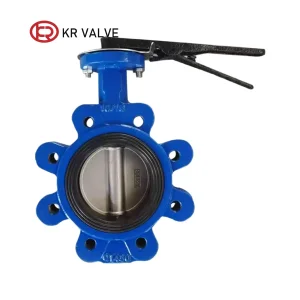
| Dual Disc Wafer Check | Ductile Iron GGG40 / WCB | SS304 / EPDM / NBR / Viton | PN10 / PN16 / Class 150 | Municipal boosting, HVAC chilled water, general water supply |
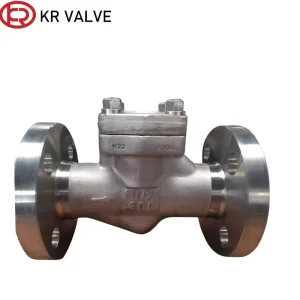
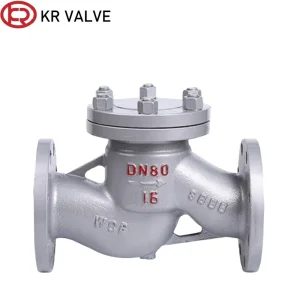
| Silent Piston Lift Check | Forged Stainless Steel F304L/F316L | Metal-to-Metal / RPTFE | PN25 - PN100 / Class 300-600 | High-pressure boiler feed pumps, chemical dosing networks |
| Rubber Ball Check Valve | Ductile Iron GGG50 / CF8 | NBR Covered Aluminum Ball | PN10 / PN16 | Wastewater lifting stations, municipal sewage, slurry pumping |
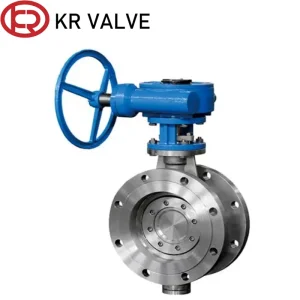
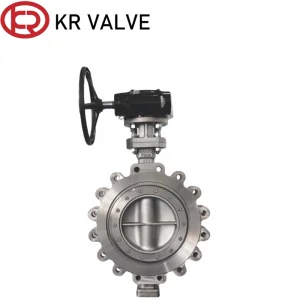
| Triple Eccentric Check/Butterfly | Cast Steel WCB / CF8M | Stellite Hardfacing / SS316 Seal | PN16 - PN63 / Class 150-300 | Desalination brine pumps, thermal power plant cooling circuits |
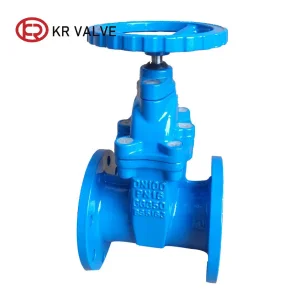
| Swing Check Valve (Flanged) | Ductile Iron / Cast Steel | Brass Seat Ring / EPDM Resilient | PN10 - PN25 / DIN F4/F5 | Agricultural irrigation pumps, deep-well water extraction |
OEM Customization Depth for International Manufacturers
As a specialized OEM non return valve supplier, custom engineering extends beyond basic dimensional scaling. We provide bespoke hydro-dynamic disc Profiling, tailored spring rates (for rapid or cushioned closing), internal Fusion-Bonded Epoxy (FBE) coating to EN 14901 standards (minimum thickness 250 µm for drinking water hygiene), and specialized flange drilling patterns according to ANSI B16.5, DIN EN 1092-2, BS4504, and JIS B2220.
Global Trends in Water Pump Valve Manufacturing
Key technological shifts shaping the next generation of non return valves in smart infrastructure and sustainable industrial fluid management.
Computational Fluid Dynamics (CFD) Optimization
Modern OEM engineering relies on advanced CFD modeling to simulate internal pressure drops, turbulent vortex generation, and cavitation risks. By sculpting internal flow passages and refining disc curvature, next-generation non return valves achieve up to 18% lower flow resistance, directly reducing the total operational pumping power required across municipal and industrial water networks.
Smart IoT Health Monitoring Integration
High-criticality pump stations are increasingly adopting smart non return valves equipped with embedded acoustic vibration sensors, stroke position indicators, and pressure micro-transducers. These smart components transmit continuous operational telemetry to SCADA systems, enabling predictive maintenance before catastrophic backflow failure or seat degradation occurs.
Eco-Friendly Metallurgy & Zero-Lead Standards
Global drinking water regulations (such as NSF/ANSI 61, WRAS, and EU Drinking Water Directives) require non return valves in potable water pump applications to utilize certified zero-lead bronzes, high-grade EPDM rubbers, and heavy-metal-free epoxy coatings to ensure safe, non-toxic water transportation.
Global Procurement Demands & Risk Mitigation
Evaluating supplier capabilities, testing protocols, total cost of ownership (TCO), and international compliance frameworks for engineering buyers.
Testing & QA Verification
B2B procurement teams require 100% factory hydrostatic shell testing (1.5× PN) and seat leakage testing (1.1× PN) according to API 598 or ISO 5208 before shipment. Non-destructive testing (NDT), such as Radiographic Testing (RT) and Ultrasonic Testing (UT) for cast bodies, is essential for high-pressure applications.
Total Cost of Ownership (TCO)
While initial purchase price is significant, pump energy loss, routine maintenance frequency, and unexpected downtime account for over 80% of a valve’s lifetime cost. Specifying high-grade GGG40 ductile iron and SS304 internal trims ensures long-term reliability and low lifecycle expenditure.
International Compliance
Global suppliers must maintain multi-market certifications, including CE-PED (Pressure Equipment Directive), ISO 9001:2015 quality management, ISO 14001 environmental compliance, API 6D / API 594 approvals, and WRAS or NSF standard clearances for potable water projects.
Traceability & Documentation
Industrial EPC contractors require full EN 10204 3.1 material test certificates (MTC), chemical composition analysis reports, mechanical property test certificates, and complete origin documentation to ensure full supply chain compliance.
China Industry 4.0: Supply Chain Resilience & Manufacturing Advantage
How advanced automation, integrated foundry clusters, and smart logistics in China deliver unprecedented quality stability and production efficiency.
Automated Sand Casting & Precision Machining
Modern Chinese valve manufacturing hubs (such as Tianjin industrial bases) have transitioned to automated green sand moulding lines and multi-axis CNC machining centers. This automation ensures dimensional tolerances within ±0.05mm, flawless surface finish for seal contact areas, and consistent body wall thickness that eliminates structural weak points.
Fully Integrated Vertical Supply Chain
From raw metal ingot melting, spectroscopic chemical control, and valve body casting to automated electrostatic epoxy powder coating, rubber vulcanization, shell pressure testing, and final export packaging—complete vertical integration under one manufacturing group cuts production lead times by 35% compared to fragmented supply networks.
Zero-Defect Quality Control Systems
Leveraging 3D Automated Optical Inspection (AOI), Coordinate Measuring Machines (CMM), dynamic balance testing for moving discs, and 100% automated pressure test benches guarantees that every OEM non return valve leaving the facility complies strictly with specified zero-leakage standards.
Localized Application Scenarios & Engineering Field Guide
Tailored non return valve configurations designed for specific operational challenges in water infrastructure, HVAC, chemical pumping, and agricultural systems.
Municipal Water Treatment & Booster Stations
Primary Concern: Water hammer elimination, hygiene maintenance, high flow capacity.
Recommended Valve: Dual-Disc Wafer Check Valve or Silent Spring-Loaded Lift Check Valve with EPDM rubber seating and WRAS-approved internal epoxy coating. Installed directly downstream of high-head booster pumps to absorb dynamic pressure shocks.
Wastewater & Municipal Sewage Lifting
Primary Concern: Solid debris clogging, rag accumulation, media abrasion.
Recommended Valve: Ductile Iron Ball Type Check Valve with NBR-encapsulated steel ball. The full-bore smooth flow passage ensures the self-cleaning ball rolls clear during pumping and drops securely onto the seat during flow reversal without snagging fibrous waste.
HVAC Chilled Water & District Heating
Primary Concern: Low installation footprint, low pressure drop, low noise.
Recommended Valve: Compact Wafer Single-Disc Swing Check or Dual-Plate Wafer Valve. Fits seamlessly between narrow pipe flanges in plant room environments while maintaining silent operating characteristics across variable flow pump configurations.
Engineering Q&A: Non Return Valves for Water Pumps
Detailed answers to complex technical questions encountered by fluid systems engineers, OEM buyers, and installation contractors.
What is the primary technical difference between a dual-plate wafer check valve and a conventional swing check valve for water pumps?
Dual-plate wafer check valves utilize two spring-loaded D-shaped plates hinged on a central pin. This design closes much faster than a heavy single-plate swing check valve because the disc travel distance is halved and spring tension assists closing before flow reversal occurs. Consequently, dual-plate check valves provide superior protection against water hammer in high-head pumping systems while offering a significantly shorter face-to-face dimension and reduced weight.
How do OEM manufacturers determine the appropriate body and seat material for aggressive or saline media?
For standard fresh water applications, Ductile Iron GGG40 with EPDM seating provides an ideal balance of tensile strength and bubble-tight sealing. For brackish water, seawater desalination, or industrial chemical pumping, OEM engineers recommend ASTM A351 CF8M (SS316) or Duplex Stainless Steel (2205) bodies matched with RPTFE or metal-to-metal Stellite hardfacing. These combinations resist pitting, crevice corrosion, and high velocity erosion.
Why is cracking pressure critical when sizing non return valves for deep-well submersible pumps?
In submersible pump setups, high static head pressure rests on the valve disc during standstill. If the cracking pressure is set too high or the spring is excessively stiff, the pump driver experiences unnecessary start-up electrical load and delayed flow initiation. Conversely, if cracking pressure is too low or unassisted by a spring, column reverse flow can cause severe impeller spin back. OEM suppliers custom-balance internal spring rates to ensure smooth opening upon pump startup while guaranteeing immediate non-slam seating during shutdown.
What installation orientation requirements apply to non return valves in vertical pump discharge lines?
When installing non return valves on vertical upward flow pipelines, spring-assisted piston lift check valves, silent check valves, and dual-plate wafer valves function effectively because spring force drives positive closure. Standard unassisted gravity swing check valves should be avoided in vertical down-flow configurations and used with caution in vertical up-flow lines due to potential disc flutter and thermal/pressure turbulence lock-up.
How does customized OEM private branding and testing certification work for global distributors?
OEM non return valve manufacturing partners provide comprehensive private labeling options, including custom casting logo integration, engraved stainless steel nameplates, specialized body paint colors (RAL color matching), bespoke packaging boxes, and tailored user manuals. Quality assurance documentation includes EN 10204 3.1 chemical/mechanical mill test reports, hydrostatic test video records, and Third-Party Inspection (TPI by SGS, TÜV, or Bureau Veritas) upon request.
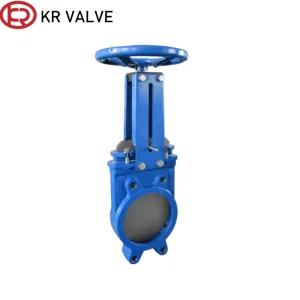
Industrial Valves & Hydraulic Controls
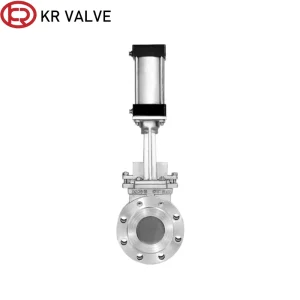
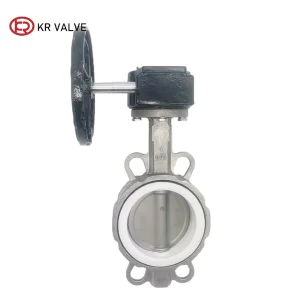
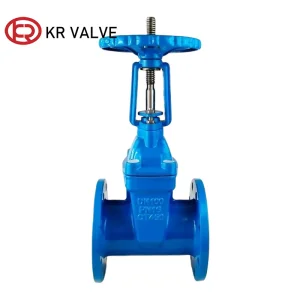
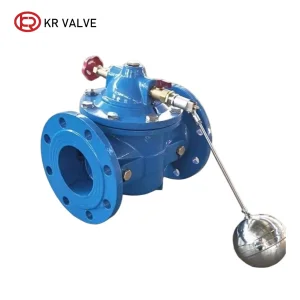
High-performance flow isolation, non-return, knife gate, and remote float control valves for industrial and municipal networks.