Industrial Lug & High-Performance Valve Series
Precision-engineered flow isolation equipment manufactured strictly to ISO 5752, BS5163, DIN F5, and ANSI B16.34 dimensional standards.
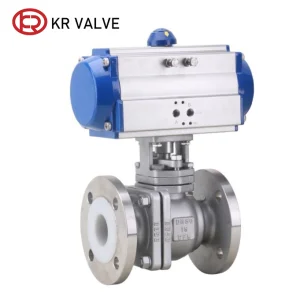
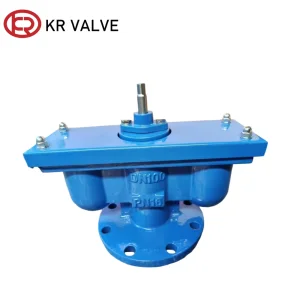

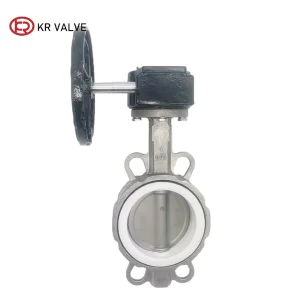
Mechanical Dynamics & Dead-End Service Engineering of Lug Valves
An exhaustive engineering evaluation of threaded lug architecture, stress dissipation, and dynamic fluid dynamics under extreme differential pressures.
Threaded Lug Topology
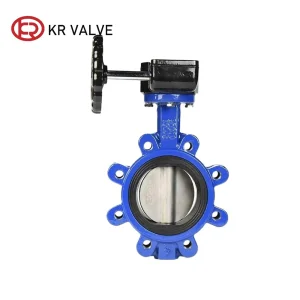
Unlike wafer-style valves that float between pipe flanges using long all-thread rods, lug butterfly valves feature precision-tapped, threaded bolt holes protruding on both sides of the valve body outer diameter. These threaded lugs correspond directly to ASME B16.5, EN 1092-1, or JIS B2220 bolt patterns, enabling independent bolting from either side of the piping assembly.
Bi-Directional Dead-End Isolation
The core structural advantage of OEM lug-style butterfly valves is their certified dead-end capability. Engineers can unbolt down-stream piping for line maintenance, pump replacement, or vessel cleaning while keeping the upstream section fully pressurized. The robust lug design retains the seat mechanism against line pressure without downstream flange support.
FEA Stress Dissipation & Stem Anti-Blowout
Using advanced Finite Element Analysis (FEA), our structural engineers optimize body wall thickness around the lug bosses to absorb bending moments induced by thermal piping expansion. Internally, double or triple O-ring stem packing systems incorporate API 609 compliant anti-blowout retaining structures to prevent stem ejection under sudden pressure surges.
Engineering Technical Callout: Hydrodynamic Torque & Flow Coefficient ($C_v$) Optimization
In high-velocity liquid and gas loops, fluid flow across a semi-open butterfly disc generates hydrodynamic torque. OEM lug valves engineered with low-profile disc geometry minimize flow disturbance, significantly reducing the dynamic pressure loss ($K$-factor) while optimizing overall flow coefficient ($C_v$). This allows plant designers to downsize piping diameters and actuator torques without compromising system volumetric throughput.
OEM Material Selection & Elastomer Vulcanization Physics
Selecting the appropriate body alloy and seat polymer matrix is critical to ensuring zero-leakage performance under corrosive, abrasive, and thermal stress conditions.
| Material Component | Standard OEM Alloys / Polymers | Operating Temp. Range | Optimal Media Applicability | Compliance Standards |
|---|---|---|---|---|
| Valve Body Alloys | Ductile Iron (ASTM A536 65-45-12 / EN-GJS-400-15) Cast Carbon Steel (WCB / ASTM A216) CF8M Stainless Steel (SS316 / 1.4408) Duplex 2205 (UNS S31803) / Super Duplex 2507 |
-29°C to +425°C (Depending on grade) |
Potable Water, HVAC, Demineralized Water, Crude Oil, Hydrocarbons, Desalination Brine, Sour Gas (NACE) | ASME B16.34 EN 12516 |
| Disc Materials | Ductile Iron (Nylon / Epoxy Coated) CF8M (316 SS) Precision Investment Cast Aluminum Bronze (ASTM B148 C95800) Monel K500 / Hastelloy C276 |
-196°C to +600°C | Seawater Ballast, Municipal Sewage, Highly Corrosive Acids, Marine Off-Shore, High-Velocity Slurry | API 609 ASTM A351 |
| Resilient Seats (Soft) | EPDM-H (High Temp Vulcanized Elastomer) NBR (Buna-N Nitrile Rubber) FKM / Viton Fluoropolymer Virgin & Reinforced PTFE (R-PTFE) |
-40°C to +200°C | Potable Water (WRAS/NSF), Oily Fluids, Concentrated Acids, Alkaline Solutions, High-Purity Chemicals | FDA 21 CFR WRAS NSF-61 |
| Metal Seats (Hard) | SS316 Laminated Metallic Matrix Stellite 6 Hard-Facing Overlay Inconel 718 Spring Seals |
-196°C to +550°C | High-Pressure Superheated Steam, Thermal Oil Loops, Refining Catalytic Crackers, Cryogenic LNG | API 607 Fire-Safe ISO 5208 Rate A |
Bonded vs. Cartridge Seats
Our OEM manufacturing facility produces both vulcanized molded-to-body seats and replaceable cartridge-style liners. Vulcanized seats prevent elastomer creep and tear under high fluid shear rates, maintaining dynamic torque stability across thousands of open-close cycles.
Precision CNC Machining
Every lug valve body undergoes 5-axis CNC machining in a single setup to guarantee precise concentricity between the top flange mounting pad, stem journals, and seat sealing faces, eliminating lateral stem friction.
Non-Destructive Testing (NDT)
All structural castings are subjected to strict quality control protocols, including Radiographic Testing (RT), Ultrasonic Testing (UT), Magnetic Particle Inspection (MPI), and Dye Penetrant Inspection (PT) to prevent internal shrinkage cavities.
Architectural Kinematics: Concentric, Double Offset & Triple Offset
Comparing the three primary structural configurations of OEM lug-style butterfly valves to match your process media pressure, temperature, and cycle frequency.
1. Concentric (Resilient Seated) Lug Valve
Design Principles: The shaft axis aligns centered with both the valve body center and disc seat perimeter. Sealing relies on compression of the elastic liner (EPDM/NBR/PTFE).
Best For: Low to medium pressure water utilities, HVAC cooling loops, and general liquid isolation up to PN16/PN25.
2. Double Offset (High Performance) Lug Valve
Design Principles: Stem axis is offset behind the seat plane (Offset 1) and shifted off the pipe centerline (Offset 2). The disc swings free of the seat within 5 degrees of opening, dramatically reducing seat wear.
Best For: High-cycle chemical process lines, hydrocarbon transport, and steam isolation up to ASME Class 300.
3. Triple Offset (TOV) Metal-Seated Lug Valve
Design Principles: Features a third offset angle integrated into the conical seating geometry, completely eliminating friction during operation. Provides zero-friction wedging action.
Best For: Extreme pressure/temperature duty (-196°C to 550°C), fire-safe refining zones (API 607), and bi-directional gas isolation up to ASME Class 600.
Macro Industry Applications & Global Operational Environments
OEM lug butterfly valves deliver dependable performance in complex engineering projects worldwide.
1. Desalination & Sea Water Reverse Osmosis (SWRO)
Brine isolation and high-pressure seawater intake require extreme corrosion protection. Our OEM lug valves utilize Super Duplex SS2507 discs, Nickel-Aluminum-Bronze (C95800) bodies, and thick vulcanized EPDM linings to resist pitting and crevice corrosion under high salinity conditions.
2. Petrochemical Refineries & Oil Tank Farms
Dead-end capabilities are crucial for oil terminal manifolds where tanks are routinely isolated for maintenance. OEM lug valves with fire-safe API 607 triple offset metallic seats deliver bubble-tight shutoff against explosive volatile organic compounds (VOCs).
3. Municipal Water Supply & Wastewater Treatment
Fully compliant with WRAS, NSF-61, and AWWA C504 standards, resilient-seated lug valves function as reliable pump discharge isolation units in municipal clean water networks and sewage sludge treatment facilities.
4. Power Generation & District Heating Networks
Extensive steam supply loops demand valves capable of handling high temperature and pressure fluctuations without thermal binding. Double offset high-performance lug valves with R-PTFE seats ensure low-torque operation across thermal cycling environments.
5. Mining & Slurry Transport Pipelines
Abrasive mineral slurries rapidly erode standard valve internals. Heavy-duty OEM lug valves with high-density polyurethane liners and stellite-hardened discs withstand solid particulate erosion for extended operation life.
6. Marine Ballast & Shipboard Piping Systems
Compact, space-saving lug valves with DNV-GL, ABS, and BV marine certifications provide dependable ballast water management aboard commercial cargo ships and offshore platforms.
Global Regulatory Compliance & OEM Customization Protocol
How our factory guarantees full compliance with international standards and offers tailored OEM engineering support from drawing generation to site commissioning.
Full Regulatory Certifications
Every valve leaving our manufacturing facility carries comprehensive certification documentation, including CE-PED 2014/68/EU, ISO 9001:2015 Quality Management, ISO 14001 Environmental System, SIL-3 Safety Integrity Level, and ATEX 2014/34/EU for explosive environments.
Traceability & MTR Reporting
All structural castings and pressure-retaining components are tagged with unique heat numbers. We provide complete EN 10204 3.1 Material Test Reports (MTR) covering chemical composition analysis, mechanical tensile/yield strength testing, and Charpy impact values.
Custom Actuation Integration
Designed with standard ISO 5211 direct-mounting top flanges, our OEM lug butterfly valves effortlessly interface with pneumatic double-acting/spring-return actuators, electric smart positioners (HART, Profibus, Modbus), and manual worm gearboxes.
OEM/ODM Customization Capabilities
We partner with valve brand owners, EPC contractors, and global distributors to provide tailored manufacturing services: custom body paint finishes (RAL colors, 300µm fusion-bonded epoxy), laser-etched private label nameplates, customized face-to-face dimensions, and special extended stem designs for underground or cryogenic installations.
Technology Roadmap: Smart IIoT Valves & Low-Emission Design
Pioneering the next generation of intelligent, ultra-low emission flow control equipment for sustainable industrial plant operations.
IIoT Predictive Health Sensors
Integrating wireless vibration, temperature, and stem torque sensors into the valve bonnet allows plant operators to monitor real-time seat wear, predict packing degradation, and prevent unscheduled plant shutdowns via cloud-based predictive maintenance analytics.
Ultra-Low Fugitive Emission Packing
To support global carbon neutrality goals, our high-performance lug valves feature specialized stem sealing systems tested to ISO 15848-1 Class AH and TA-Luft standards, guaranteeing leakage rates below $10^{-5}\text{ mg}\cdot\text{s}^{-1}\cdot\text{m}^{-1}$.
Hydrogen-Ready Metallurgy & Sealing
As industrial energy transitions toward clean green hydrogen, our metallurgical research team is pioneering specialized alloy surface treatments and non-embrittling metallic seals capable of safely containing high-pressure pure hydrogen gas streams.
Frequently Asked Engineering Questions
Detailed technical answers to common questions asked by procurement managers, process engineers, and plant operations specialists.
Q1: What is the exact difference between Wafer, Lug, and Double-Flanged butterfly valves in dead-end service?
Wafer-style butterfly valves are designed purely for clamping between two pipe flanges using full-length studs; removing downstream piping causes the valve to lose structural retention, making them unsuitable for dead-end service. Lug-style butterfly valves feature threaded lugs protruding from the outer rim that bolt directly to companion flanges, allowing one side of the piping to be completely dismantled while maintaining full working pressure on the upstream side. Double-flanged butterfly valves feature traditional flanged ends, ideal for large-diameter pipelines (DN600+) where heavy structural loading requires dedicated flange bolt connections on both sides.
Q2: How do you accurately calculate actuator torque requirements for high-pressure lug valves?
Total operating torque is calculated by summing three mechanical forces: 1) Breakaway/Seating Torque: Friction between the disc edge and elastomer/metal seat under static line pressure; 2) Hydrodynamic Torque: Fluid dynamic forces exerted on the asymmetric disc during flow velocity; and 3) Stem Packing Friction: Resistance generated by stem seal compression. Our engineering team applies a minimum 1.25 to 1.5 Safety Factor (SF) over calculated seating torque to account for viscosity changes, seat swelling, and long periods of non-operation.
Q3: Which seat elastomer should be specified for media containing traces of hydrocarbons and acids?
Standard EPDM offers exceptional resistance to hot water, steam, and polar chemicals, but rapidly swells and degrades in the presence of mineral oils and hydrocarbons. NBR (Nitrile) excels in oily service up to 90°C. For chemical streams containing both aliphatic hydrocarbons and acids, FKM (Viton) or a PTFE-lined (Teflon) seat with a silicone backer is strongly recommended. PTFE provides near-universal chemical inertness across temperatures from -30°C to +200°C.
Q4: What are the bolt torquing standards and patterns required during lug valve installation?
Flange bolts on lug butterfly valves should be tightened using a criss-cross (star) pattern in incremental steps (30%, 60%, 100% of target torque) using a calibrated torque wrench. This prevents uneven face compression and body distortion, which could cause stem binding or seat leakage. Thread engagement depth inside the lug tapped holes must be at least 1.0 to 1.5 times the bolt diameter depending on body material strength (Ductile Iron vs. WCB vs. Stainless Steel).
Q5: What is the typical OEM customized manufacturing lead time for project orders?
Standard catalogue lug valves (DN50-DN300, Cast Iron/Ductile Iron, EPDM seat) are kept in regional warehouse stock for immediate dispatch within 3 to 7 days. Customized OEM orders involving special alloys (Duplex 2205, Hastelloy), custom face-to-face dimensions, fusion-bonded epoxy coating specs, or integrated pneumatic/electric actuation packages typically carry a lead time of 25 to 35 calendar days, including full hydro-testing and MTR documentation.
Q6: How does API 607 Fire-Safe certification validate metallic seated lug valves?
API 607 standard evaluates the performance of a valve exposed to total flame envelope burn at temperatures between 750°C and 1000°C for 30 minutes. The test measures external shell leakage and internal seat leakage both during the burn and during high-pressure cooldown. Triple offset metal-seated lug valves utilize laminated stainless steel and graphite seal rings to maintain ISO 5208 bubble-tight shutoff even after soft packing elements burn away.
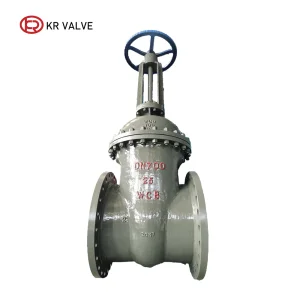
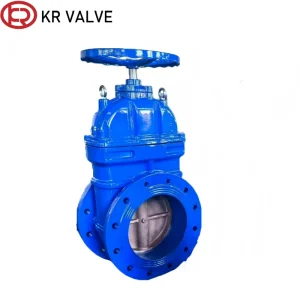
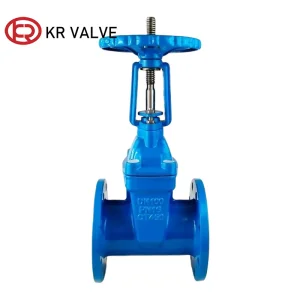
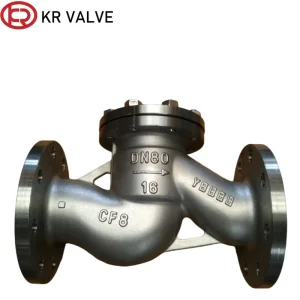
Complementary Gate, Check & Control Valve Solutions
Explore our full range of heavy-duty industrial valves manufactured for high-reliability municipal water and industrial pipelines.