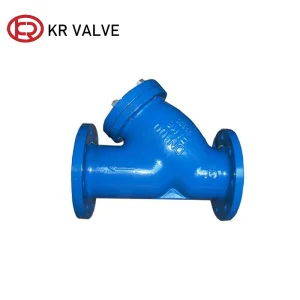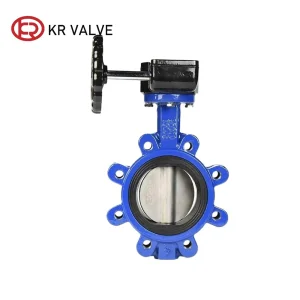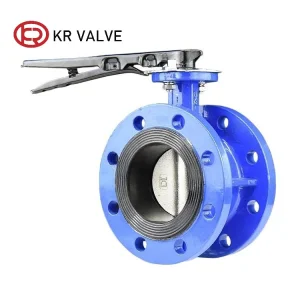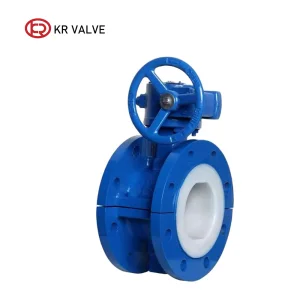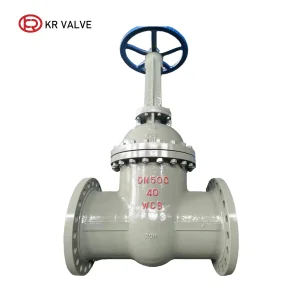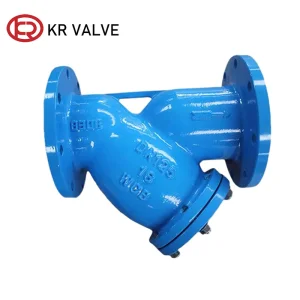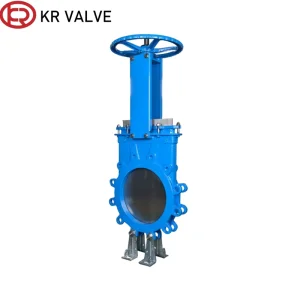
Featured Industrial Valve Portfolio
Direct sourcing from advanced factory floors. Engineered to DIN, BS, and ANSI international specifications for long-cycle reliability in mission-critical operations.
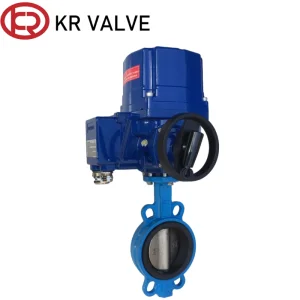
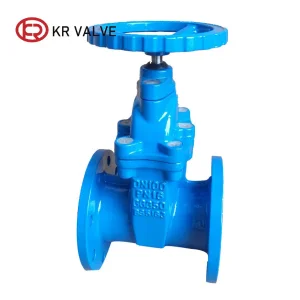
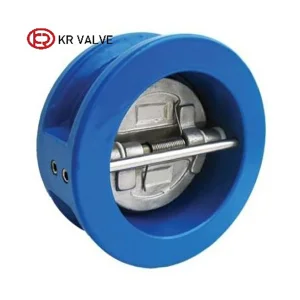
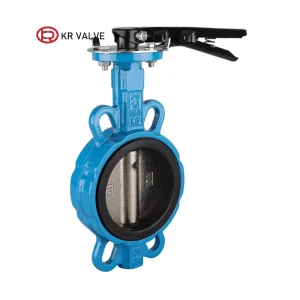
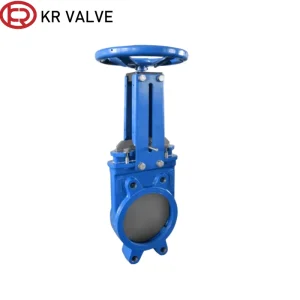
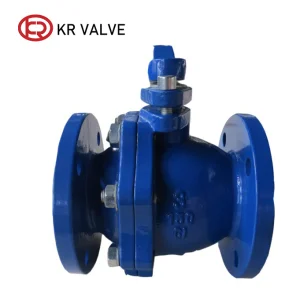
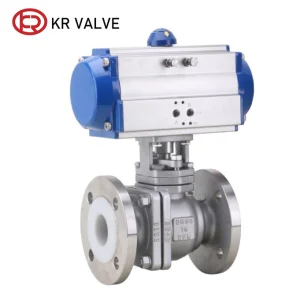
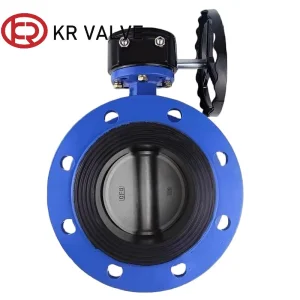
Macro-Industrial Landscape & Procurement Architecture
Decarbonization, urban municipal upgrades, and expanding petrochemical hubs drive stringent criteria for heavy-duty flanged isolation equipment across continents.
Global Enterprise Procurement Dynamics for Flanged Butterfly Valves
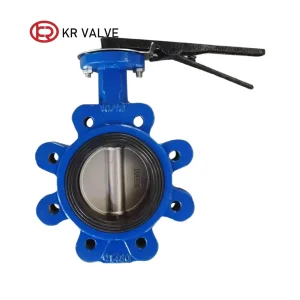
In modern process industries and civil water infrastructure, the demand for flanged butterfly valves has shifted from simple on/off commodity procurement toward highly specified, engineered assemblies. EPC contractors, municipal authorities, and plant engineers are continually challenged by abrasive solids, high hydraulic pressures, cycling stress, and dynamic fluid dynamics. Unlike wafer or lug patterns that rely on through-bolts clamped between opposing pipeline flanges, flanged butterfly valves provide dedicated, self-contained flanged bodies with independent bolting. This structural feature significantly improves safety during pipeline segment servicing and mitigates pipe strain transfer directly into the sealing seat.
Across emerging and industrialized economies alike, capital expenditure (CAPEX) considerations are closely audited alongside total operational life cycle costs (OPEX). An unplanned line shutdown caused by valve stem blowout, elastomer delamination, or excessive hydrodynamic torque quickly eclipses the original acquisition savings of low-tier units. Consequently, procurement departments are auditing manufacturer foundries, metallurgical traceability certifications (EN 10204 3.1), non-destructive testing (NDT) logs, and adherence to international design codes such as EN 593, API 609, AWWA C504, and ISO 5752.
Sector-Specific Industrial Applications
Tailored material selections, seat elastomer chemistry, and actuation dynamics optimized for critical fluid networks worldwide.
- Ductile Iron GGG40/GGG50 bodies with fusion-bonded epoxy (FBE ≥250μm)
- EPDM potable water certified liners (WRAS/NSF-61 compliant)
- Double eccentric geometry minimizing seal compression set
- Streamlined CF8/CF8M disc contours for minimized drag and debris accumulation
- Nitrile (NBR) and Viton (FKM) seat compounds resistant to hydrocarbon oils
- Full-bore flanged bodies mitigating localized turbulence and pipe erosion
- ISO 5211 direct mounting pad ready for electric and pneumatic actuation
- High-temperature vulcanized EPDM/High-performance PTFE lining options
- Blowout-proof stem design compliant with EN 736 and API 609 standard
Technical Evaluation: Flanged vs. Wafer vs. Lug Architecture
A rigorous engineering benchmark to guide EPC design firms, mechanical consultants, and procurement managers in selecting the optimal configuration.
| Evaluation Parameter | Double Flanged Butterfly Valve | Lug Butterfly Valve | Wafer Butterfly Valve |
|---|---|---|---|
| Primary Mechanical Connection | Dedicated integral flanges bolted directly to mating pipe flanges on both ends. | Tapped threaded lugs surrounding the valve body; bolted from both sides. | Compact body clamped between pipe flanges using extended all-thread studs. |
| Dead-End & Downstream Isolation | Optimal Safe downstream pipe removal under full upstream pressure. | High Qualified for dead-end service if pressure ratings allow. | Not Applicable Downstream piping cannot be disconnected without total drainage. |
| Resistance to Bending Stresses | Exceptional. High structural mass absorbs pipeline deflection and thermal load. | Moderate. Independent lug bolting reduces shell distortion under moderate strain. | Low. Heavy pipe deflections compress the valve body directly, potentially binding disc. |
| Diameter Range & Large Bore Suitability | Standard from DN50 to DN3000+. Ideal for municipal transmission mains. | Typically economical up to DN600; larger sizes add significant tooling cost. | Optimized for DN40 to DN600; long studs in large diameters present thermal elongation risk. |
| Weight & Handling Considerations | Heavier body casting; requires structured rigging and hoist equipment on site. | Medium weight profile; convenient for plant skids and modular racks. | Lightest construction; minimal footprint, easiest manual alignment in tight spots. |
Technical Roadmap: Future Developments in Valve Manufacturing
The industrial valve sector is experiencing a technological evolution spurred by digital manufacturing, artificial intelligence, and smart flow monitoring. Forward-looking foundries are integrating computational fluid dynamics (CFD) into disc profiling, yielding low-loss hydrodynamic contours that drop pressure drop coefficients (Cv values) and mitigate pumping energy costs across the life of municipal distribution facilities.
Furthermore, the integration of Industrial Internet of Things (IIoT) sensors directly into flanged butterfly valve gearboxes is emerging as an industry standard for predictive maintenance. By capturing acoustic emissions, stem torque fluctuations, micro-vibrations, and cycle timing in real time, operators can preempt elastomeric seal degradation long before an environmental breach occurs. Additive manufacturing and laser cladding technologies are also being utilized on valve seating surfaces, allowing cost-effective ductile iron bodies to feature stellite or Hastelloy hard-facing rings that resist severe cavitation and abrasive media.
Rigorous Quality Infrastructure & International Compliance
Comprehensive oversight from raw ingot casting to automated hydro-testing ensures zero defects across high-volume production schedules.
Procurement & Technical FAQ
In-depth responses to common questions raised by procurement managers, project contractors, and consulting engineers.
What are the key technical advantages of flanged butterfly valves over wafer and lug configurations?
Which global flange drilling standards can be accommodated by OEM/ODM manufacturers?
How do concentric, double eccentric, and triple eccentric flanged butterfly valves differ in application?
What quality documentation and testing certificates accompany export valve consignments?
What factors should be evaluated when selecting elastomers for flanged butterfly valves?
Comprehensive Fluid Control Inventory
Explore heavy-duty isolation valves, specialized strainers, and resilient-seated check assemblies configured for international engineering contracts.