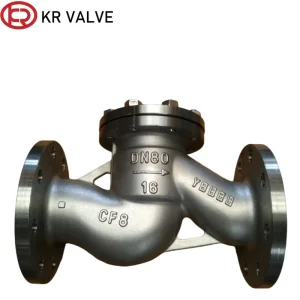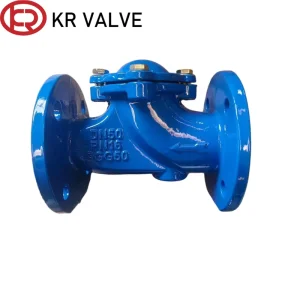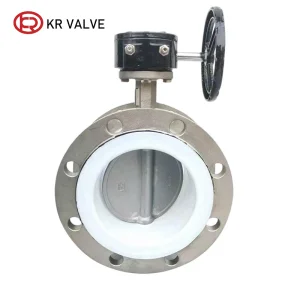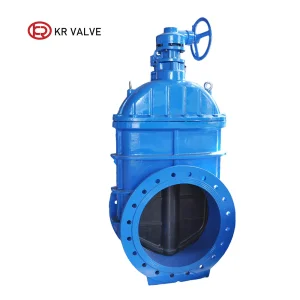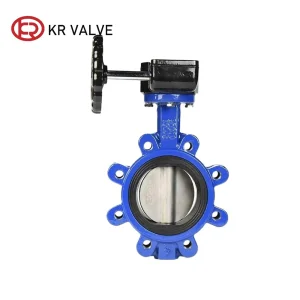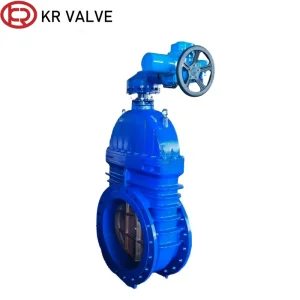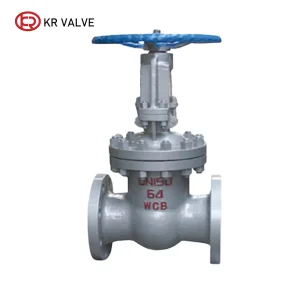
Featured Industrial Hydraulic & Flow Control Valves
Explore engineered flow control solutions built to BS, DIN, and ANSI standards with proven reliability in heavy industrial installations.
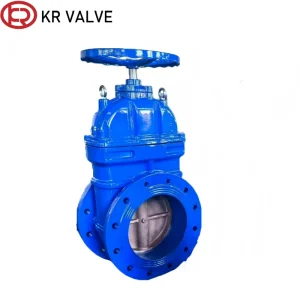
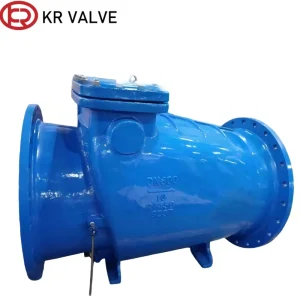
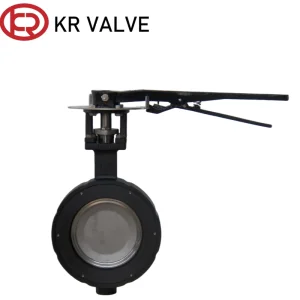
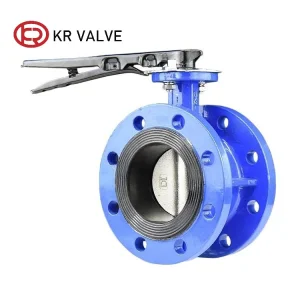
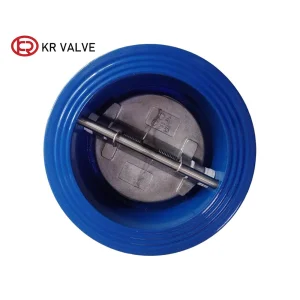
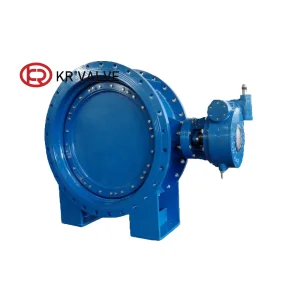
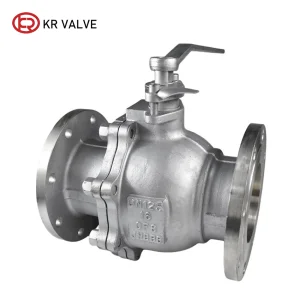
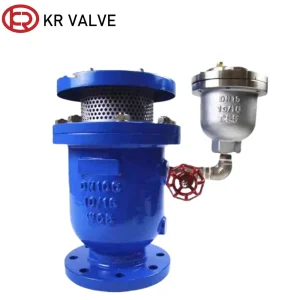
The Engineering Physics of Hydraulic Actuation in Industrial Valves
Understanding force density, fluid dynamics, and proportional hydraulic power transmission in large-bore flow isolation systems.
High-Torque Density & Incompressible Power
Hydraulic actuation represents the zenith of mechanical power transmission for heavy-duty industrial valve control. Operating under working pressures typically ranging from 70 bar to over 350 bar (1,000 to 5,000 PSI), hydraulic fluid power utilizes incompressible hydraulic oils or water-glycol fire-resistant fluids to generate immense linear thrust vectors and rotary torque outputs.
Unlike pneumatic actuators—which are limited by gas compressibility, pressure drop delays, and elasticity under high load variations—hydraulic actuators maintain stiffness and instantaneous positional control. This makes them indispensable for large-diameter gate valves (DN600 to DN3000), heavy triple eccentric butterfly valves, and high-pressure water transmission pipelines where seal break-out torque can exceed 250,000 Nm.
Linear Pistons vs. Quarter-Turn Rotary Actuators
Hydraulic actuators fall primarily into two mechanical kinematics architectures:
1. Linear Double-Acting / Spring-Return Cylinders: Directly coupled to non-rising stem (NRS) or rising stem gate valves and knife gate valves. The linear hydraulic pressure acts directly against a heavy piston shaft, producing steady thrust profiles up to 500,000 N without mechanical gear losses.
2. Scotch-Yoke & Rack-and-Pinion Hydraulic Drives: Designed for ball valves, plug valves, and double/triple offset butterfly valves. Scotch-yoke mechanisms generate a parabolic torque curve that perfectly mirrors a valve’s seating and unseating torque requirement, providing maximum torque at the exact break-open position (0°) and fully closed position (90°).
| Actuation Technology | Energy Medium | Operating Pressure | Max Thrust / Torque Density | Fail-Safe Mechanism | Duty Cycle & Response |
|---|---|---|---|---|---|
| High-Pressure Hydraulic Actuator | Incompressible Mineral Oil / HFC | 70 bar - 350 bar | Highest (> 300,000 Nm) | Spring-Return / Accumulator Pack | 100% Continuous / Instantaneous |
| Electro-Hydraulic Self-Contained Unit | Closed-Loop Internal Hydraulic Oil | 100 bar - 250 bar | High (Up to 150,000 Nm) | Integral Mechanical Spring Pack | S2/S3 Duty / Precise Modulation |
| Pneumatic Cylinder / Diaphragm | Compressible Dry Air / Nitrogen | 4 bar - 10 bar | Moderate (Up to 40,000 Nm) | Heavy Mechanical Spring Pack | 100% Continuous / Fast Velocity |
| Electric Motor Drive (Multi-Turn) | 3-Phase AC / 24V DC Electricity | N/A (Gear Reduction) | Moderate to High (Gear Limited) | Battery Backup / Supercapacitor | S2 15-30 Min Duty / Moderate Speed |
Localized Application Scenarios & Global Industry Landscape
Deploying hydraulically actuated valve infrastructure across critical energy, water grid, and severe-service industrial installations globally.
Subsea & Offshore Oil & Gas Isolation
In subsea manifolds and offshore riser isolation, valves operate under harsh hydrostatic pressure ambient conditions at depths down to 3,000 meters. Subsea electro-hydraulic actuators utilize pressure-compensated hydraulic fluid reservoirs and high-grade 316L/Duplex stainless steel enclosures.
Combined with double-flanged triple eccentric butterfly valves or trunnion ball valves, these hydraulic actuators deliver emergency shutdown (ESD) capability, sealing pipelines tightly against hydrocarbons even in severe thermal expansion cycles.
Municipal Water Networks & Surge Dampening
In high-head pumping stations and cross-country municipal water trunklines, sudden pump trip events cause catastrophic hydraulic shockwaves (water hammer). Hydraulically actuated micro-resistance slow-closing check valves and 200X pressure reducing valves act as dynamic safety barriers.
Equipped with dual-stage hydraulic damping cylinders, these valves execute a rapid initial closure to stop bulk reverse flow, followed by a controlled, cushioned final seating stroke that safely dissipates fluid momentum.
Hydroelectric Turbine Penstock Control
Hydropower plants require instant inlet isolation to prevent runaway turbine damage during grid disconnects. Large-bore double eccentric butterfly valves fitted with hydraulic counterweight actuators utilize stored gravitational potential energy alongside hydraulic power cylinders.
During normal operation, hydraulic pressure holds a heavy counterweight in the open position; upon control signal trip, hydraulic oil drains at a regulated orifice speed, releasing the weight to force zero-leakage shut-off within seconds.
Regulatory & Compliance Benchmark: Global industrial buyers require hydraulic actuation packages to conform with rigorous international standards: API 6D (Pipeline Valves), ISO 12490 (Actuation Systems for Pipeline Valves), AWWA C511, BS EN 593 (Industrial Valves - Metallic Butterfly Valves), and CE PED 2014/68/EU safety directives.
China Factory Supply Chain Resilience & Manufacturing Infrastructure
How integrated industrial clusters in Tianjin and major manufacturing hubs deliver unmatched scale, cost efficiency, and quality assurance.
Full-Chain Vertical Integration in Tianjin Hub
Tianjin has established itself as one of the world's premier valve engineering and manufacturing ecosystems. By maintaining complete vertical control over raw material foundries, resin-sand casting facilities, heavy-duty CNC machining, and automated epoxy powder coating lines, Chinese manufacturers eliminate supply chain fragmentation.
Ductile iron castings (GGG40 / GGG50 acc. to DIN 1693) and cast steel (WCB, CF8, CF8M) undergo spectral chemistry analysis and ultrasonic flaw detection prior to precision machining, guaranteeing material integrity for pressure-containing shells.
100% Hydrostatic Pressure & Torque Testing
Every hydraulically actuated valve assembly undergoes rigorous pre-shipment verification adhering to ISO 5208, API 598, and EN 12266-1 standards:
- Shell Hydrostatic Test: 1.5x nominal pressure rating (e.g., 24 bar for PN16 rating) verifying zero casing porosity.
- High-Pressure Seat Leakage Test: 1.1x nominal pressure ensuring bi-directional Rate A bubble-tight shut-off.
- Hydraulic Actuation Impulse Testing: Multi-cycle stroke tests verifying piston seal wear resistance and dynamic response times.
Technology Roadmap & Future Outlook: Smart Electro-Hydraulics
Merging fluid power strength with Industry 4.0 digital intelligence, IoT diagnostics, and eco-friendly biodegradable hydraulic fluids.
Self-Contained Electro-Hydraulic Units
The industry is shifting rapidly toward self-contained electro-hydraulic actuators. These hybrid units integrate a micro-hydraulic pump, electric motor, fluid reservoir, and solenoid control block into a single hermetically sealed actuator package.
This eliminates the need for expensive, external centralized Hydraulic Power Units (HPUs) and hundreds of meters of hydraulic stainless steel piping, delivering the raw force of hydraulics with the simple wiring footprint of electric actuation.
IoT Edge Intelligence & Predictive Digital Twins
Modern hydraulic actuators feature integrated Linear Variable Differential Transformers (LVDT), pressure transducers, and fluid contamination sensors connected to Modbus, HART, or Profibus digital buses.
Edge processing algorithms track stroke speed degradation, internal seal bypass leakage, and oil viscosity in real time—enabling predictive maintenance alerts long before an operational failure occurs in critical pipeline assets.
Biodegradable Eco-Fluids & Zero-Emission Solenoids
Environmental compliance mandates are driving the adoption of HEES (synthetic ester) and HETG (triglyceride) bio-hydraulic fluids in water utility dams and offshore marine environments.
Concurrently, low-power pulse solenoid pilot valves and energy-recovering hydraulic circuits reduce continuous electric power consumption, supporting net-zero greenhouse gas emission industrial facilities.
OEM/ODM Engineering Customization & Localized Support
Tailoring valve specifications, body metallurgy, sealing geometry, and hydraulic pilot controls to project requirements.
Tailored Engineering Capabilities
Every industrial pipeline project presents unique mechanical constraints, media characteristics, and control interface requirements. Our OEM/ODM technical team works directly with EPC consultants and global procurement managers to tailor hydraulic valve packages:
- Custom Face-to-Face Dimensions: Built acc. to ISO 5752, EN 558-1, or ANSI B16.10 retrofitting existing flange layouts.
- Specialized Body & Seat Metallurgy: GGG40 Ductile Iron, WCB Carbon Steel, CF8/CF8M SS, or Aluminum-Bronze for seawater service.
- Sealing System Engineering: Vulcanized EPDM (NSF/WRAS certified), PTFE/R-PTFE, or metal-to-metal Stellite hard-facing.
- Hydraulic Manifold Configuration: Integrated manual hand-pump override, dual-redundant solenoids, and stroke speed restrictor valves.
Quality Documentation & Global Compliance
To streamline customs clearance, project audit compliance, and engineering sign-offs, all wholesale orders are accompanied by comprehensive quality packages:
- EN 10204 3.1 Material Test Certificates: Full heat numbers and chemical analysis traceability for all cast bodies and stems.
- Non-Destructive Examination (NDE): Radiographic (RT), Ultrasonic (UT), and Magnetic Particle Inspection (MPI) reports.
- Coating Verification: Dry film thickness (DFT) logs and holiday testing for fusion-bonded epoxy (FBE) coatings (> 250 µm).
- Third-Party Inspection Support: Seamless audit collaboration with SGS, BV, TÜV, and Lloyd's Register.
Technical & Commercial FAQ: Hydraulic Valve Actuation
Expert answers to key technical questions raised by procurement officers, project engineers, and valve distributors.
What are the key mechanical advantages of hydraulic actuation over electric actuation in large valves?
How does a hydraulic slow-closing check valve eliminate water hammer in pumping lines?
What information is required to size a hydraulic actuator for a double eccentric butterfly valve?
Can China-manufactured hydraulically actuated valves meet international project standards?
What fail-safe options exist during a total power or hydraulic pressure loss?
What is the recommended maintenance schedule for hydraulic valve actuators?
Complete Flow Control & Valve Catalog Selection
Explore our comprehensive lineup of resilient seated gate valves, ball check valves, and high-pressure non-return valves.