Featured OEM Valves & Hydraulic Components (Part 1)
Explore our top-tier industrial valve solutions, engineered to international standard specifications for dam discharge, municipal mains, and industrial processing.
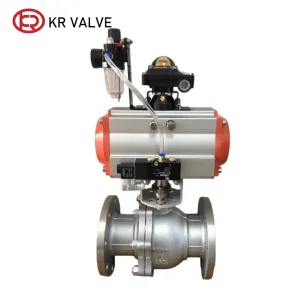
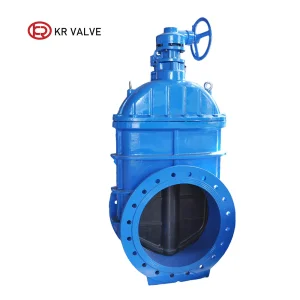
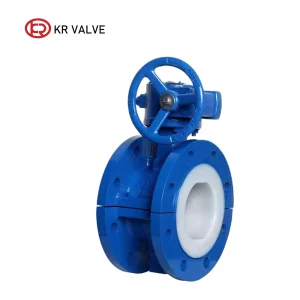
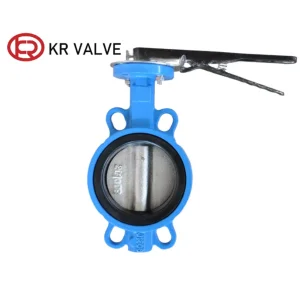
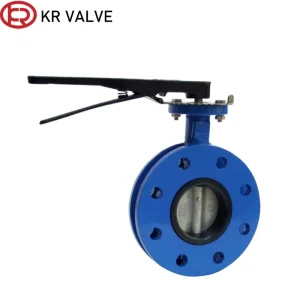
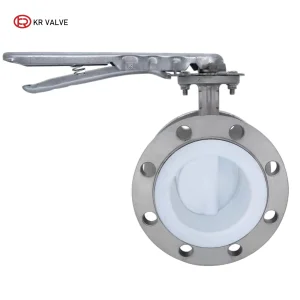
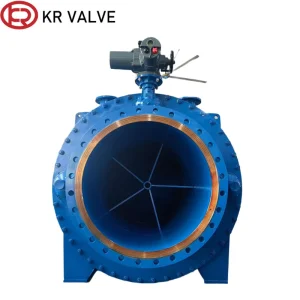
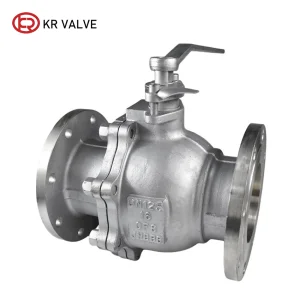
Fixed Conical Valve Engineering Architecture & Hydrodynamic Principles
An authority overview on Howell-Bunger sleeve valve mechanics, discharge coefficients, cavitation control, and energy dissipation physics in high-head hydraulic systems.
Howell-Bunger Mechanics
The Fixed Conical Valve (commonly known as a Howell-Bunger Valve or Fixed Cone Valve) is an essential terminal regulation valve designed to discharge high-velocity fluid flows under massive static heads directly into atmospheric conditions or submerged receiving basins.
Unlike standard butterfly or gate valves which suffer severe throttling turbulence and cavitation when partially opened, the fixed cone design guides water over a stationary internal cone via an axially moving outer sleeve gate.
- Zero-cavitation radial discharge cone geometry
- Sleeve actuation eliminating stem bending moments
- Discharge coefficient ($C_d$) up to 0.85 – 0.90
Energy Dissipation Physics
Energy dissipation is the primary hydraulic challenge for dam bottom outlets and reservoir bypass systems. A fixed conical valve transforms a concentrated high-pressure jet into a hollow, expanding conical spray sheet.
This wide cone increases the contact surface area between high-velocity liquid and surrounding air by over 400%, facilitating massive atmospheric momentum exchange and kinetic energy reduction prior to basin impact.
- Atmospheric jet aeration preventing plunge pool scouring
- Hood-enclosed jet options for focused stream discharge
- Hydro-dynamic balance minimizing structural vibration
OEM Manufacturing Rigor
As a specialized OEM fixed conical valve manufacturer, production requires advanced dynamic finite element analysis (FEA) and Computational Fluid Dynamics (CFD) modeling to verify structural integrity under hydraulic pressure up to 4.0 MPa.
Every internal radial rib is hydrodynamically shaped to minimize drag, while heavy-duty bronze or stainless steel guide shoes prevent sleeve binding during high-differential travel.
- Fabricated structural steel Q355B / Stainless Steel 316L
- Weld overlays with Stellite or Hard Chrome facing
- Hydraulic cylinder or twin electric synchronizer drives
Macro-Industry Solutions & Engineering Deployments
How leading civil hydraulic contractors and dam authority engineers deploy customized fixed cone sleeve valves to guarantee long-term operational safety.
Dam Bottom Outlets
In hydroelectric dam infrastructure, bottom outlet discharge valves must withstand high static pressure while regulating reservoir drawdowns or environmental releases. Submerged or free-discharge conical valves eliminate destructive pressure surges.
Equipped with aeration hoods, these valves channel water cleanly into stilling basins, protecting foundation bedrock against erosion.
Hydroelectric Turbine Bypass
During sudden electrical grid load rejections, Francis or Kaplan turbines must trip closed rapidly. A fixed conical bypass valve opens synchronously to relief excess penstock water pressure, preventing catastrophic water hammer line bursting.
Custom OEM positioning sensors provide sub-second stroke feedback to plant SCADA automated systems.
Municipal Raw Water Supply
Large municipal water treatment utilities utilize smaller bore fixed conical valves (DN300-DN1000) for pressure breaking at high-elevation aqueduct drop stations.
By modulating high upstream pressure down to ambient intake levels without noise or cavitation damage, municipal piping lifespan is extended significantly.
| Valve Type Parameter | Fixed Conical (Howell-Bunger) Valve | Standard Butterfly Valve | Plunger / Needle Valve |
|---|---|---|---|
| Discharge Efficiency ($C_d$) | High (0.85 - 0.90) | Medium (0.60 - 0.70) | High (0.80 - 0.86) |
| Cavitation Resistance | Exceptional (External Aeration) | Poor at partial throttling | Excellent (Internal Vanes) |
| Kinetic Energy Dissipation | Superior (Spread Conical Jet) | Low (Concentrated Jet) | Moderate to High |
| Actuation Force Requirement | Balanced Sleeve (Low Torque) | High Hydraulic Unbalance | Medium (Axial Drive) |
| Installed OEM Unit Cost | Cost-Effective for Large Bore | Lowest initial cost | Higher mechanical complexity |
Engineering Insight: Aeration Hood vs. Atmospheric Free Discharge
When specifying an OEM Fixed Conical Valve, mechanical designers must decide between a Free-Discharge Configuration (which sprays water into a 45° to 90° expanding cone in open air) and a Jet-Discharge Hooded Configuration. The addition of a stainless steel concentric discharge hood concentrates the spray into a tight cylindrical jet, ideal for discharging into narrow concrete discharge channels or sub-surface impact basins where side-wall splash damage must be strictly avoided.
Advanced Metallurgy, Actuation & Smart IoT Roadmap
State-of-the-art material selections, precision CNC machining protocols, and next-generation smart hydraulic controls driving reliability.
Heavy Metallurgy & Cladding
Long-term exposure to high-velocity silt-laden water causes severe abrasive wear. Advanced OEM suppliers employ high-tensile carbon steel bodies (Q355B / ASTM A516 Gr 70) welded with stainless steel 316L or Duplex 2205 seat ring overlays.
For aggressive marine or acidic water reservoirs, full CF8M/CF3M stainless steel body casting ensures complete immunity against localized pitting.
Synchronized Sleeve Drive
Operating a multi-ton sliding sleeve smoothly against immense hydraulic forces requires twin-screw electromechanical or dual hydraulic cylinder actuators.
Integrated mechanical synchronizer shafts prevent sleeve skewing or angular binding, guaranteeing tight linear tolerances under asymmetric flow turbulence.
Smart IoT & Condition Monitoring
Industry 4.0 digitizes the classic conical valve. Modern installations integrate real-time acoustic emission sensors, stroke position transmitters, and bearing vibration probes.
Data streams straight to modern hydro-plant control rooms, alerting maintenance engineers to micro-cavitation or seal wear long before failure occurs.
OEM Supplier Qualification & Compliance Protocols
How international procurement teams evaluate Chinese valve manufacturers, non-destructive testing (NDT), and compliance with global engineering codes.
Stringent Hydrostatic Testing
Every OEM fixed conical valve leaving our factory undergoes 100% full-body shell testing at 1.5 times the nominal pressure (PN) and bubble-tight seat leakage testing at 1.1 times PN, in accordance with ISO 5208 and AWWA C520 standards.
Non-Destructive Examination (NDT)
Critical structural welds undergo 100% Radiographic Testing (RT) or Ultrasonic Testing (UT) to detect subsurface inclusions. Magnetic Particle Inspection (MT) and Liquid Penetrant Testing (PT) verify surface crack immunity on all load-bearing ribs.
Surface Protection & Coating
Given harsh submerged operational conditions, valve bodies are blast-cleaned to ISO 8501-1 Sa 2.5 and electrostatically coated with high-build drinking-water certified Fusion Bonded Epoxy (FBE) to a minimum dry film thickness of 300 microns (AWWA C550).
OEM Fixed Conical Valve Technical FAQ
In-depth answers to common engineering, procurement, and installation queries raised by infrastructure project managers.
What is the core working principle of a Fixed Conical Valve (Howell-Bunger Valve)?
How does a Fixed Conical Valve prevent cavitation under high differential pressure?
What actuation methods are available for large-diameter fixed cone valves?
- Electro-Hydraulic Actuators: Dual double-acting hydraulic cylinders powered by a compact hydraulic power unit (HPU), offering smooth modulation and emergency fail-safe gravity or accumulator closure.
- Electric Motor Drives: Twin synchronized electric actuators connected via gearboxes and linear drive screws.
- Manual Gearbox Drives: Handwheel operated via worm gearing for smaller diameters or emergency manual override.
Can a Fixed Conical Valve be used for submerged discharge applications?
What parameters are required when requesting an OEM conical valve quotation?
- Maximum design static pressure head and working pressure (PN rating).
- Target volumetric flow rate range ($m^3/s$ or GPM).
- Nominal pipe size diameter (DN) and flange standard (ANSI B16.5, DIN, BS, EN 1092).
- Discharge condition: Free atmospheric, hooded jet, or submerged.
- Actuation preference (Hydraulic cylinder vs Electric 3-phase).
What certifications and testing reports accompany export shipments?
OEM Pipeline Components & Industrial Valve Catalog (Part 2)
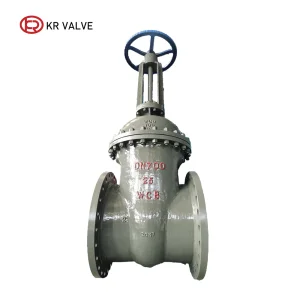
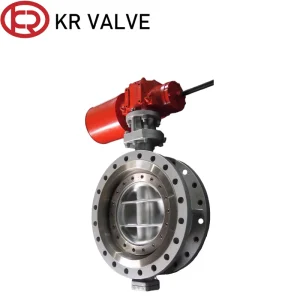
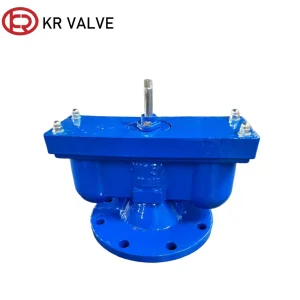
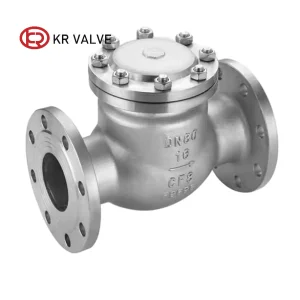
Complementary industrial valves including heavy-duty gate valves, eccentric butterfly valves, air vent valves, and check valves manufactured under strict quality standards.