Featured Industrial Valve Solutions
Precision-engineered flow control equipment certified to international DIN, BS, ANSI, and ISO engineering benchmarks.
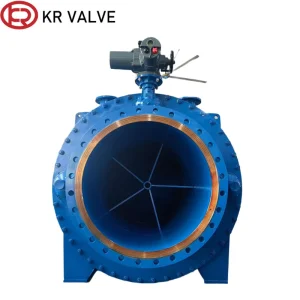
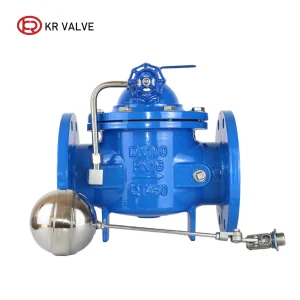
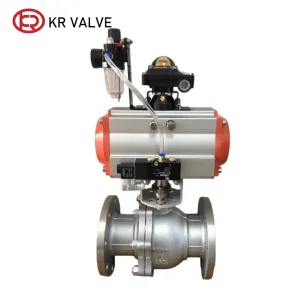
Global Commercial & Industrial Status of Non-Rising Gate Valves
An authoritative analysis of macro infrastructure demand, global procurement dynamics, and material evolution driving modern fluid engineering.
Macro Procurement Shifts
Across North America, Europe, the Middle East, and Asia-Pacific, municipal water utilities and EPC contractors are rapidly transitioning from legacy metal-seated valves to resilient seated non-rising stem (NRS) gate valves. Driven by global initiatives for zero-water-loss urban distribution networks, procurement teams prioritize low operational torque, long-term anti-corrosion performance, and compact vertical installation footprints.
Space-Constrained Design
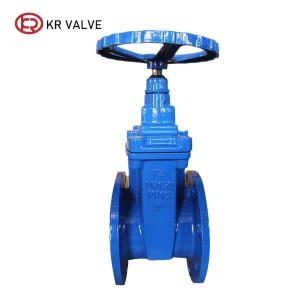
Unlike Outside Screw and Yoke (OS&Y) valves where the stem lifts upward during opening, a Non-Rising Gate Valve keeps its stem entirely contained within the valve body. This anatomical feature makes NRS valves the global industry benchmark for subterranean trench installations, vault chambers, shipboard piping, and crowded industrial plant basements.
E-E-A-T Quality Assurance
KR VALVE (TIANJIN) CO., LTD. incorporates strict metallurgical controls, using Ductile Iron (GGG50 / EN-GJS-500-7) paired with 100% vulcanized EPDM/NBR wedges. Operating across 30+ specialized production facilities, we deliver fully documented batch traceability, hydrostatic pressure testing, and chemical composition analysis compliant with DIN, BS, and ANSI standards.
Technical Anatomy & Engineering Benchmarks
Detailed comparative evaluation of Non-Rising Gate Valve specifications across international standard bodies.
| Engineering Parameter | DIN 3352 F4 / F5 Standard | BS 5163 Standard | AWWA C515 / C509 Standard |
|---|---|---|---|
| Nominal Diameter Range | DN50 – DN1200 (2" – 48") | DN50 – DN600 (2" – 24") | NPS 2" – NPS 36" |
| Pressure Rating (PN / Class) | PN10, PN16, PN25 | PN10, PN16 | Class 125, Class 150, Class 250 (300 PSI) |
| Body Metallurgy | Ductile Iron GGG40 / GGG50 | Ductile Iron BS EN 1563 500/7 | Ductile Iron ASTM A536 65-45-12 |
| Wedge Encapsulation | EPDM / NBR High-Resilience Rubber | Drinking Water Approved EPDM (WRAS) | AWWA Certified EPDM (NSF/ANSI 61) |
| Stem Material & Threading | Stainless Steel 2Cr13 / SS304 / SS316 (Internal Thread) | Stainless Steel BS970 431S29 / SS316 | Dezincification Resistant Brass / Stainless Steel |
| Coating Technology | Electrostatic Epoxy Powder (≥250μm) | Thermally Bonded Epoxy (RAL 5005 / 5017) | AWWA C550 Polymeric Coating |
Core Technical Innovations in NRS Architecture
- Internal Stem Nut Engagement: The trapezoidal stem nut is embedded directly inside the elastomeric wedge. As the handwheel or electric actuator turns the stem, the wedge travels vertically along the stationary stem axis, completely avoiding stem elevation.
- Triple O-Ring Stem Sealing: Replaces traditional packing glands with maintenance-free NBR/EPDM O-rings. The upper seals can be replaced safely while the pipeline remains under full operating pressure.
- Full-Bore Hydrodynamic Passage: The valve chamber features a smooth, obstructionless bottom ditch design. This eliminates debris accumulation, drastically cuts head loss coefficient ($K$-factor), and lowers pumping energy consumption.
Anti-Corrosion & Zero-Leakage Performance
- Fusion-Bonded Epoxy (FBE) Shield: Internal and external surfaces are coated with non-toxic electrostatic epoxy powder, cured at high temperatures to provide robust protection against soil chemicals, stray currents, and aggressive fluids.
- Rubber Vulcanization Integrity: Advanced injection molding binds the EPDM elastomer directly to the high-strength ductile iron wedge core, ensuring zero peeling under repeated high-velocity flow shear stress.
- Bi-Directional Bubble-Tight Shutoff: Engineered to hold full rated pressure (1.1x working pressure shell test, 1.0x seat test) seamlessly in both flow directions.
Macro Industry Solutions & Field Applications
How wholesale non-rising gate valves solve critical operational challenges in global infrastructure projects.
Municipal Potable Water Systems
Direct buried underground mainlines demand maintenance-free operation for decades. NRS resilient seated gate valves are fitted with extension spindles and surface boxes, permitting surface-level operation without expensive concrete access manholes.
HVAC & High-Rise Building Services
Compact mechanical rooms in high-rise towers present extreme spatial limits. Non-rising stems allow pipework to be routed close to ceilings and structural beams without requiring clearance for an elevating stem.
Industrial Wastewater & Sewage
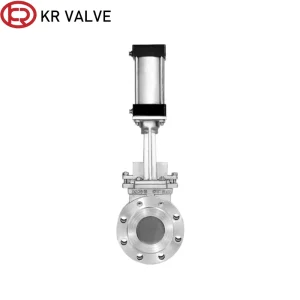
Combined with smooth-bore passages, NRS knife gate valves and soft-sealed sluice valves prevent fibrous solid accumulation. The internal stem design isolates mechanical drive components from abrasive slurries.
Agricultural & Desalination Networks
Seawater reverse osmosis (SWRO) and large-scale agricultural irrigation require valves that withstand high salinity and soil settlement. Super-duplex and nickel-aluminum bronze trimmed NRS gate valves provide long service life.
Technology Roadmap & Engineering Evolution
How digital manufacturing, smart sensing, and sustainable metallurgy are transforming gate valve production.
Smart IoT Position Sensing
Future-ready NRS valves feature integrated non-contact magnetic position sensors inside the bonnet. These communicate via LoRaWAN or NB-IoT, transmitting real-time open/close percentage data directly to municipal SCADA platforms without compromising IP68 submersible sealing.
Self-Healing Elastomers
R&D initiatives focus on advanced self-healing polymer matrix coatings for resilient wedges. Minor surface scratches caused by particulate matter automatically seal under line pressure, extending maintenance intervals beyond 25 years.
Low-Carbon Foundry Processing
Transitioning to electric induction furnaces and 100% recycled scrap steel feeds reduces the embodied carbon footprint of ductile iron gate valves, aligning with global green procurement frameworks (EPD certification).
Global Compliance & OEM/ODM Localization Support
Seamless supply chain integration for B2B distributors, valve stockists, and international engineering firms.
Regulatory Certifications
Manufactured under ISO 9001:2015, ISO 14001, and ISO 45001 quality frameworks. Products hold CE (PED 2014/68/EU), WRAS (UK), ACS (France), and NSF/ANSI 61/372 drinking water compliance certificates.
Custom Engineering (OEM/ODM)
Full customization of face-to-face dimensions (DIN F4, DIN F5, BS5163, ISO 5752 series), flange drilling (ANSI B16.5, EN1092-2, JIS B2220), custom operating nut dimensions, and buyer brand embossing.
Export & Freight Logistics
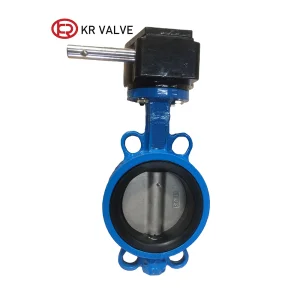
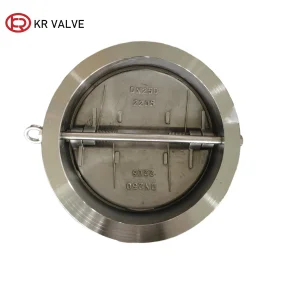
Seaworthy packaging using fumigated wooden cases or heavy-duty steel framed pallets. Mixed-category container consolidation services allow buyers to combine gate, butterfly, check, and strainers in a single shipment.
Frequently Asked Questions (B2B Procurement FAQ)
Expert technical clarity addressing key selection criteria for valve procurement managers and engineering teams.
Comprehensive Flow Control Product Range
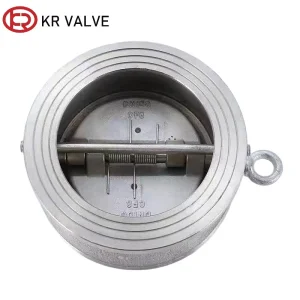
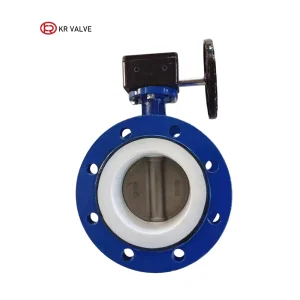
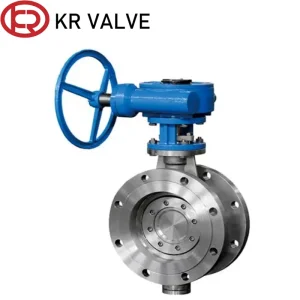
Explore our wider catalog of high-performance check, butterfly, ball, and control valves manufactured for critical industrial services.