
Featured Lifting Check Valves for Uruguayan Projects
Heavy-duty, precision-machined non-return solutions customized for high-pressure pumping stations, municipal water grids, and process lines across Montevideo, Salto, and Ciudad de la Costa.
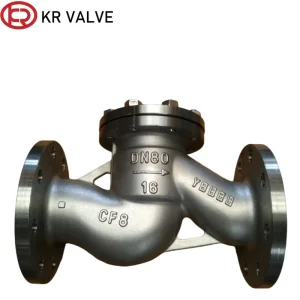
Stainless Steel Lift Check Valve for High-Pressure Water Pumps
View Specifications & Inquiry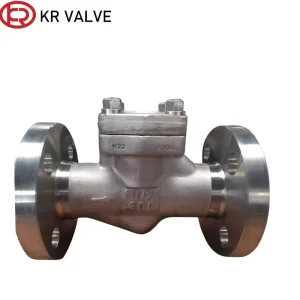
Custom Forged Valve Lifting Piston Check Valve F304L
View Specifications & Inquiry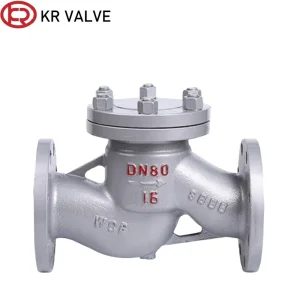
Industrial WCB One-Way Lift Check Valve (3/4" - 4" Shut-Off)
View Specifications & Inquiry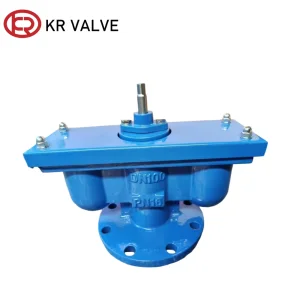
Double Port Automatic Air Evacuation & Combined Check Valve
View Specifications & InquiryUruguayan Industrial Infrastructure & Flow Control Demand Dynamics
Analyzing the macroeconomic drivers, regulatory frameworks, and fluid mechanics requirements governing valve procurement in Uruguay.
Uruguay has emerged as one of South America's most stable, technologically advanced, and ecologically committed industrial economies. Strategically positioned along the Río de la Plata basin, the country serves as a vital logistics gateway for the Mercosur region. The national industrial sector is characterized by intense activity in pulp and paper processing (exemplified by major multi-billion-dollar megaprojects such as UPM Paso de los Toros and Montes del Plata), large-scale municipal water distribution managed by OSE (Obras Sanitarias del Estado), thermal and hydroelectric power generation under UTE (Administración Nacional de Usinas y Trasmisiones Eléctricas), and an ambitious green hydrogen energy transition (the H2U roadmap).
These demanding process environments place unique physical and chemical stresses on fluid containment systems. Non-return valves, specifically lifting check valves (piston and globe lift types), play a vital defensive role within pipeline networks. They are designed to prevent backflow, protect high-pressure feed pumps against destructive hydraulic shock waves (water hammer), and ensure immediate positive shut-off under zero pressure differential conditions.
1. The Critical Role of Lifting Check Valves in Pulp & Paper Processing
Uruguay is one of the global leaders in bleached hardwood kraft (BHKP) eucalyptus pulp production. The chemical recovery process, black liquor evaporation lines, boiler feedwater loops, and chlorine-dioxide bleaching stages require specialized valves. Lifting check valves fabricated from forged stainless steel (such as ASTM A182 F304L/F316L) or duplex stainless steel (F51/F53) are essential. Unlike standard swing check valves, piston lift check valves utilize a guided disc movement that aligns perfectly perpendicular to the valve seat. This minimizes seat misalignment, even under rapid thermal cycling and high velocity flows carrying suspended pulp fibres or aggressive liquor residues.
2. Municipal Water Supply & OSE Infrastructure Compliance
The Uruguayan state water authority, OSE, maintains stringent municipal potable water and raw water treatment standards. Pumping stations drawing water from the Santa Lucía River or the Uruguay River require non-return valves capable of handling high volumetric flow rates without inducing pressure drops ($K$-factor minimization). Our lifting check valve series incorporate hydrodynamic internal geometry and spring-assisted closure kinetics. This ensures the valve closes prior to flow reversal, eliminating line vibration and preventing column separation events in long transmission mains serving Montevideo and suburban metropolitan zones.
Engineering Architecture: Piston vs. Spring-Assisted Lift Check Mechanics
Deep-dive analysis into fluid dynamics, cracking pressure calibration, and trim metallurgy for industrial valve selection.
Piston Lift Design
Features an internal dashpot cylinder where line fluid creates a damping cushion. This eliminates disk chatter during turbulent, high-velocity flow in gas, steam, and high-pressure water lines.
Spring-Assisted Closure
Employs Inconel X-750 or SS316 springs to force immediate seating as forward velocity approaches zero, preventing backflow before fluid column reversal can generate pressure surges.
Stellite Hardfaced Seats
Valve disc and body seats are hardfaced with Cobalt-base Stellite No. 6 alloy to resist erosion, galling, and cavitation under differential pressures up to 420 bar (Class 2500).
Mathematical Hydrodynamics of Water Hammer Mitigation
In high-pressure pump discharge applications throughout Uruguay, water hammer presents a major structural risk to pipeline integrity. The theoretical surge pressure generated by rapid valve closure or sudden pump stoppage is governed by the Joukowsky equation:
ΔP = ρ · c · Δv
Where ΔP is the surge pressure (Pa), ρ is fluid density (kg/m³), c is the acoustic wave speed in the fluid/pipe system (m/s), and Δv is the change in fluid flow velocity (m/s).
Standard swing check valves rely on gravity and reverse fluid velocity to force the disc back onto its seat. Consequently, fluid reversal occurs before the disc fully seats, causing a sudden velocity collapse ($\Delta v$) that triggers massive pressure spikes. In contrast, our spring-loaded lifting check valves feature engineered cracking pressures (calibrated from 0.05 bar to 0.3 bar) and rapid mechanical response times (< 0.15 seconds). By seating the piston precisely at the moment of zero forward velocity, $\Delta v$ is held near zero, effectively eliminating acoustic water hammer spikes in high-lift pumping networks across Uruguay.
Comparison Matrix: Non-Return Valve Architectures
To assist Uruguayan procurement managers and project engineers in specifying the correct valve design, the technical table below contrasts lifting check valves with alternative check valve styles:
| Valve Architecture | Pressure Rating | Seating Tightness | Water Hammer Risk | Maintenance & Wear | Ideal Application in Uruguay |
|---|---|---|---|---|---|
| Lifting Piston Check | ANSI Class 150 - 2500 / PN16 - PN400 | Zero Leakage (API 598 Metal or Soft) | Extremely Low (Spring Assisted) | Low (Self-guiding piston) | High-pressure steam boilers, feed pumps, chemical dosing |
| Swing Check Valve | ANSI Class 150 - 600 / PN10 - PN100 | Moderate (Metal Seated) | High (Prone to slam) | Moderate (Hinge pin wear) | Low-velocity raw water lines, gravity drainage mainlines |
| Dual Disc Wafer Check | ANSI Class 150 - 900 / PN16 - PN160 | Good (Rubber / Metal) | Low to Moderate | Moderate (Torsion spring fatigue) | Space-constrained municipal plant skids, HVAC chilling loops |
| Tilting Disc Check | ANSI Class 300 - 1500 / PN40 - PN250 | High (Precision Machined) | Very Low (Pivot offset) | High initial investment | Large-diameter hydroelectric dams (Salto Grande, Río Negro) |
Global Procurement, Logistics & Mercosur Compliance Framework
Streamlining factory-direct valve exports from China to Montevideo with full technical certification and customs compliance.
Importing industrial valves into Uruguay requires navigating strict customs documentation, quality certification standards, and logistical routes. As a global lifting check valve manufacturer and factory partner, we offer comprehensive compliance protocols tailored for Uruguayan EPC contractors, distributors, and municipal procurement departments.
1. International Standards & Material Traceability
Every valve manufactured for export to Uruguay undergoes 100% factory hydrostatic and pneumatic seat testing in strict accordance with API 598, ISO 5208, and EN 12266-1. Raw materials are verified through Positive Material Identification (PMI) and optical emission spectrometry. Every shipment is accompanied by complete EN 10204 3.1 Material Test Certificates (MTC), detailing chemical composition, tensile strength, yield points, and Charpy V-notch impact values.
2. Navigating Mercosur Tariffs & Customs (DNA / Dirección Nacional de Aduanas)
Under the Mercosur Common External Tariff (AEC - Arancel Externo Común), industrial valves imported into Uruguay under HS Code 8481.30 (Check Valves) are subject to specific import duty structures. We provide accurate tariff documentation, including commercial invoices, packing lists with net/gross weights, and Certificate of Origin documents to ensure smooth clearance through the Port of Montevideo (Puerto de Montevideo) or Carrasco International Airport cargo terminal.
3. Sea Freight & Packaging Integrity
Transoceanic shipping from East Asian ports to Montevideo typically spans 35 to 45 days. To prevent atmospheric moisture corrosion and salt mist damage during maritime transport, our export packaging adheres to strict ISPM-15 heat-treated wooden crate standards. Valve internal cavities are sealed with plastic end caps, vacuum-wrapped in vapor corrosion inhibitor (VCI) bags, and secured with internal bracing to withstand dynamic motion during ocean transit.
Tailored Flow Control Solutions for Uruguay's Major Industries
Decades of manufacturing expertise matched to specific regional operating conditions across South America.
Thermal Power & UTE Grids
Forged steel A105 and F22 piston check valves capable of withstanding superheated steam temperatures up to 540°C and working pressures exceeding 160 bar in power generation facilities.
Dairy & Beverage Processing
316L stainless steel hygienic check valves equipped with food-grade EPDM or FKM soft seats compliant with FDA regulations, serving major dairy processors in San José and Colonia.
Green Hydrogen (H2U) Initiatives
Zero-emission, ultra-tight seating lifting check valves designed with micro-polished sealing faces and specialized hydrogen-compatible alloys to prevent embrittlement in electrolysis systems.
Comprehensive Valve Catalog for Uruguayan Infrastructure
Explore our complete range of check, gate, butterfly, and automatic control valves manufactured to international ISO, DIN, ANSI, and BS standards.
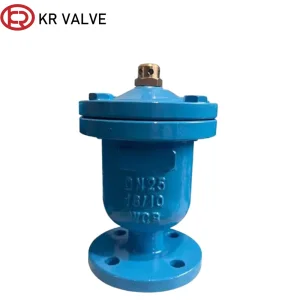
Single Port Automatic Air Release Check Valve WCB PN16
View Specifications & Inquiry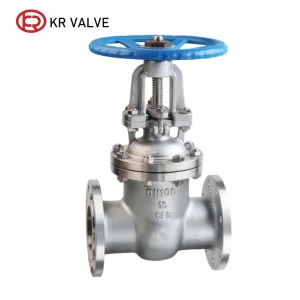
CF8 Stainless Steel High-Pressure Gate Valve DN100 (4")
View Specifications & Inquiry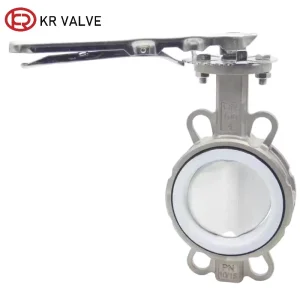
Corrosion-Resistant PTFE Lined Wafer Isolation Valve with SS Body
View Specifications & Inquiry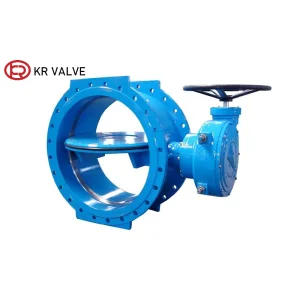
Double Eccentric Butterfly Valve (DN200-DN3000) with SS304 Seal
View Specifications & Inquiry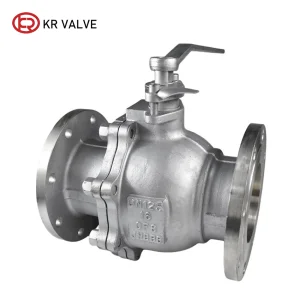
Flanged SS304 Floating Ball Valve DN50-DN300 PN16/PN25
View Specifications & Inquiry
OEM Wafer Butterfly Valve with PTFE Lined Seat & SS Body
View Specifications & Inquiry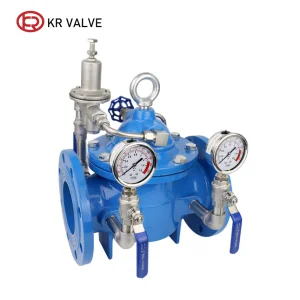
200X Piloted Pressure Relief & Check System (DN50-DN300)
View Specifications & Inquiry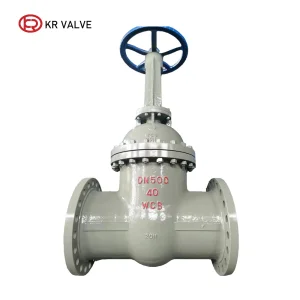
Heavy-Duty WCB Big Size Sluice Isolation Valve PN64 DN500
View Specifications & InquiryTechnological Roadmap & Next-Generation Flow Control Innovation
Integrating smart sensors, advanced metallurgy, and zero-emission designs into modern check valve manufacturing.
As Uruguayan industries move toward digital transformation and decarbonization under national sustainability mandates, industrial flow control hardware must evolve beyond basic mechanical isolation. Our R&D division focuses on integrating three advanced technological pillars into our lifting check valve lines:
1. IoT-Integrated Predictive Monitoring Systems
For remote pumping stations in rural departments like Salto, Tacuarembó, and Rivera, manual valve inspection can be costly and labor-intensive. We offer smart lifting check valves fitted with non-intrusive acoustic emission sensors and linear position transmitters. These sensors continuously monitor piston movement, seat contact force, and high-frequency acoustic signatures. By transmitting real-time data via wireless industrial networks to SCADA control centers, municipal engineers can detect seat erosion, scale buildup, or spring degradation before catastrophic backflow events occur.
2. Advanced Thermal Spray Hardfacing & Anti-Cavitation Trims
Severe service process lines in chemical pulp manufacturing demand enhanced erosion resistance. Our manufacturing plant utilizes High-Velocity Oxygen-Fuel (HVOF) thermal spray coating technology to apply Tungsten Carbide (WC-Co-Cr) and Chromium Carbide coatings to valve pistons and seats. This achieves surface hardness levels exceeding 70 HRC, extending operational service life by up to 400% compared to standard stainless steel seats when handling abrasive black liquor or slurry media.
3. Flange & Standard Compatibility Engineering
Many legacy industrial installations in Uruguay feature a hybrid of European DIN standards (such as EN 1092-1 PN16/40) and American standards (ASME B16.5 Class 150/300). Our factory specializes in cross-standard flange machining, offering dual-drilled face-to-face dimensions (DIN 3202 F1 / ASME B16.10) that allow Uruguayan plant managers to retrofit high-performance lifting check valves into existing pipe networks without expensive spool modifications.
Frequently Asked Questions (FAQ) for Uruguayan Buyers & Engineers
Expert engineering insights regarding specification, installation, sizing, and international logistics for lifting check valves.
Partner with a Trusted Lifting Check Valve Manufacturer
Delivering Factory-Direct Quality, Engineering Support, and Logistics Coverage Across Uruguay and South America.